Russian Olive vs. Russian Almond: What’s the Difference?
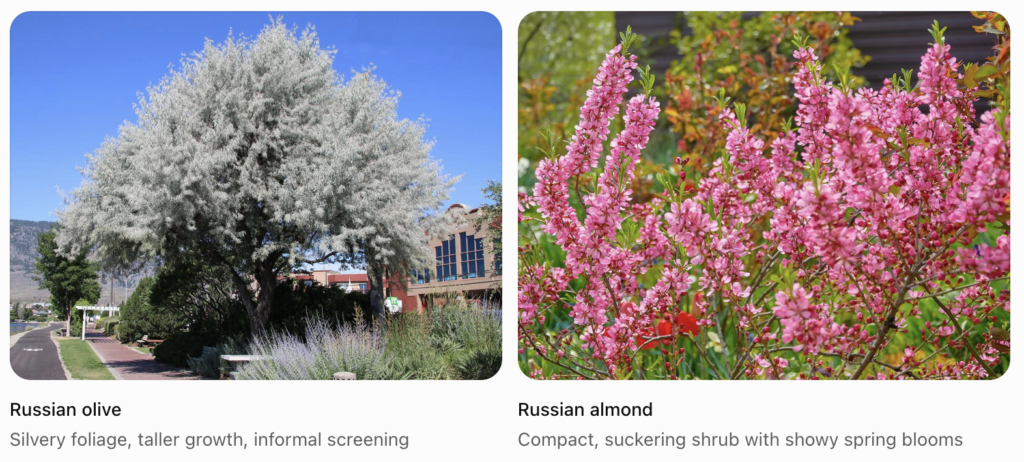
Despite their similar names, Russian Olive (Elaeagnus angustifolia) and Russian Almond (Prunus tenella) are two very different plants. Both are hardy, drought-tolerant, and well suited to challenging growing conditions, but they offer different benefits in the landscape.
For gardeners in the Black Hills and surrounding plains, understanding those differences can help determine which plant is the better choice.
At a Glance
| Feature | Russian Olive | Russian Almond |
|---|---|---|
| Plant Type | Large shrub or small tree | Small flowering shrub |
| Mature Size | 15–25 ft tall × 15–20 ft wide | 3–5 ft tall and wide, spreading by suckers |
| Hardiness | USDA Zone 3 | USDA Zone 2 |
| Growth Rate | Fast | Moderate |
| Flowers | Small, fragrant yellow flowers | Showy pink spring flowers |
| Foliage | Distinctive silver-gray leaves | Green leaves |
| Drought Tolerance | Excellent once established | Very good once established |
| Soil Tolerance | Handles poor, alkaline, and some saline soils | Adaptable, prefers well-drained soil |
| Wildlife Value | Fruit, nesting sites, and protective cover | Spring flowers and dense protective cover |
| Primary Uses | Windbreaks, shelterbelts, screening | Flowering hedges, borders, wildlife plantings |
Russian Olive: Tough, Tall, and Versatile
Russian Olive is valued for its ability to grow where many other trees struggle. Its silvery foliage, fragrant yellow flowers, and dense branching make it both attractive and functional.
It tolerates wind, drought, alkaline soils, and exposed conditions, making it useful for larger properties and rural landscapes.
Russian Olive is particularly useful for:
- Windbreaks and shelterbelts
- Privacy screening
- Wildlife cover and nesting habitat
- Dry, exposed acreage plantings
- Challenging soils and upland erosion control
Its small, olive-like fruits provide food for birds, while its thorny branches create protective cover.
Important planting consideration: Russian Olive is non-native and can spread through bird-dispersed seeds. It is considered invasive in some areas, particularly along waterways and riparian corridors, where it can displace native vegetation. Avoid planting near creeks, rivers, wetlands, and natural drainage areas. Monitor for unwanted seedlings, including beyond the immediate planting area.
Russian Almond: Small, Showy, and Hardy
Russian Almond is a compact flowering shrub that brings an impressive display of pink blossoms to the spring landscape.
Unlike Russian Olive, which is primarily grown for its size and toughness, Russian Almond is valued for its ornamental appeal and dense, low-growing habit.
Its early flowers provide a welcome splash of color after winter, and its ability to tolerate cold, wind, and relatively dry conditions makes it an interesting choice for northern landscapes.
Russian Almond is particularly useful for:
- Flowering shrub borders
- Low, informal hedges
- Spring-interest plantings
- Wildlife cover
- Mass plantings on larger properties
- Dry, sunny landscape areas
Russian Almond spreads naturally through root suckers, gradually forming colonies. This can be desirable where a dense planting is wanted, but it should be considered when choosing a location. It is not the best choice for a small, tightly maintained planting bed where spreading would be unwelcome.
Although its name suggests an edible almond, Russian Almond is ornamental and should not be grown for edible nuts.
Which One Should You Choose?
Choose Russian Olive if you need height, screening, or a tough windbreak plant.
Russian Olive is better suited to larger properties where its mature size and dense branching can provide shelter from wind and create substantial screening. It is particularly useful in dry, exposed upland locations, provided its potential to spread is taken into account.
Choose Russian Almond if you want spring flowers, a smaller shrub, or a low-growing thicket.
Russian Almond is a good option for adding color to a hardy landscape, creating informal flowering hedges, or providing low-growing wildlife cover. Allow room for its natural suckering habit.
Can They Be Planted Together?
Absolutely. On a suitable property, the two can complement each other.
Russian Olive can provide the taller background screening, while Russian Almond adds a lower layer of vegetation and colorful spring flowers.
Together, they can create a layered planting with different heights, textures, and seasonal interest. However, Russian Olive’s potential for seed dispersal should be considered before including it in any planting, especially near natural waterways.
The Bottom Line
Russian Olive and Russian Almond share a reputation for toughness, but they are not interchangeable.
Russian Olive offers height, screening, and excellent tolerance of difficult growing conditions. Russian Almond provides spring flowers, compact growth, and dense, low-growing cover.
Both can have a place in a thoughtfully planned Black Hills landscape. The best choice depends on your available space, planting conditions, and what you want the plants to accomplish.
At Black Hills Gardens, we believe choosing the right plant starts with understanding both its benefits and its limitations. Our goal is to provide hardy plants and practical information so you can make the best decisions for your property.