
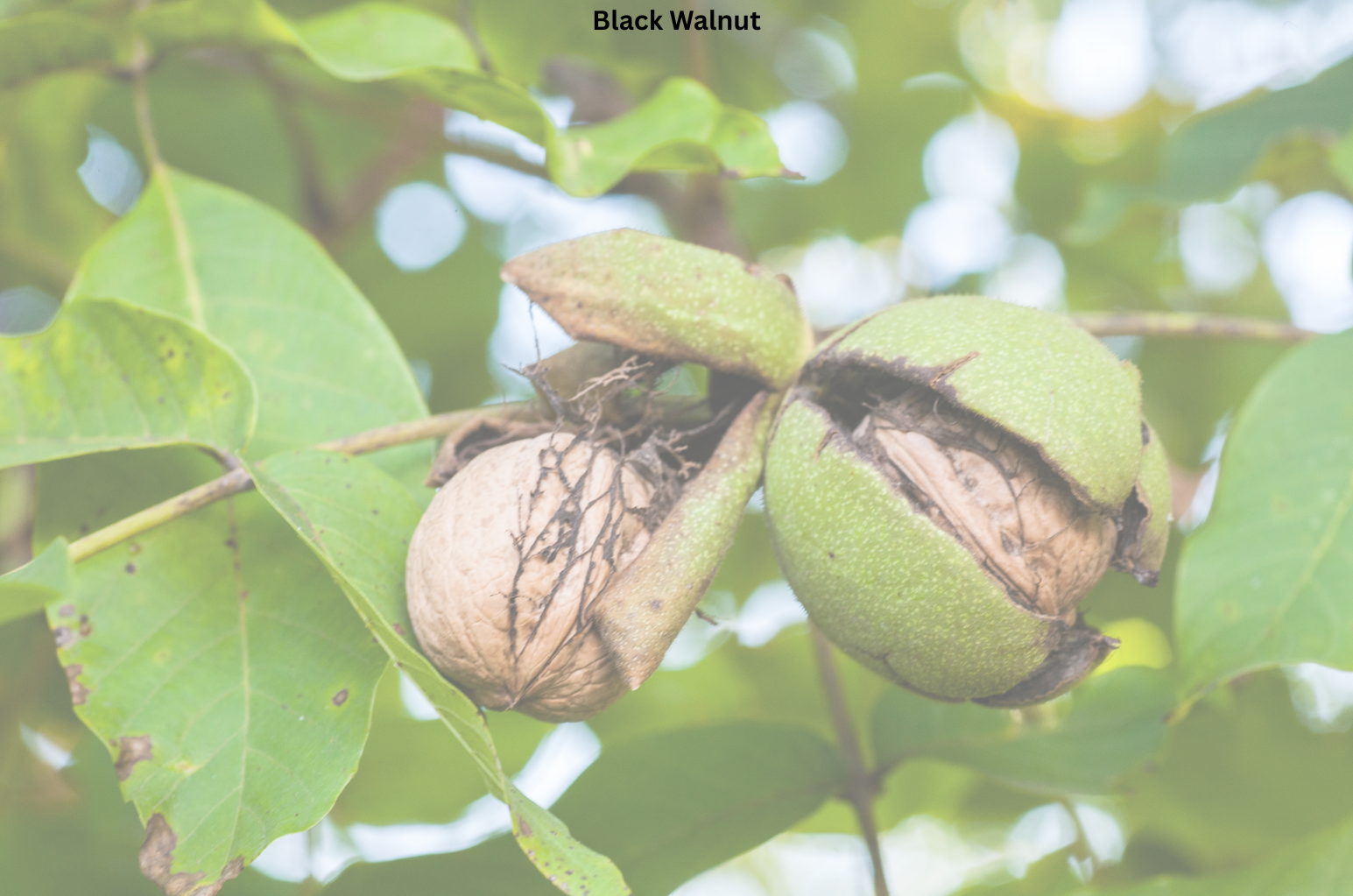
Black Walnut (Juglans nigra)
A magnificent shade tree known for its high-quality timber and edible nuts.
| Feature | Details |
|---|---|
| Expected Size | Height: 50 – 75 ft (can exceed 100 ft) Spread: 50 – 75 ft |
| Growth Rate | Medium to Fast: Young trees can grow over 2 feet per year in optimal conditions. |
| Foliage | Large, airy, fern-like leaves that turn a bright yellow in autumn. |
| Nuts | Produces a valuable, hard-shelled, edible nut. |
| Hardiness Zone | USDA Zone 4-9 (suitable for the Black Hills). |

Why the Black Hills Should Consider a Black Walnut Tree
For the right spot in a Black Hills landscape, the Black Walnut offers a combination of long-term value and impressive beauty.
- A Valuable Investment: Beyond its aesthetic appeal, the Black Walnut is prized for its dark, strong, and durable wood, making it a valuable long-term asset.
- Majestic Shade: Its large, spreading canopy provides excellent shade for larger properties, creating a natural retreat from the summer sun.
- Edible Nuts: Enjoy a harvest of delicious, rich-flavored nuts that can be eaten fresh or used in baking.
- Local Resilience: While not a typical forest tree in the Black Hills, it is hardy enough for the region (Zone 4) and thrives in deep, well-drained soil.
Important Considerations for the Black Hills:
Black Walnuts produce a toxic substance called juglone, especially from their roots and husks, which can inhibit the growth of many other plants.
- Plan Ahead: Before planting, be aware that many plants—including tomatoes, peppers, potatoes, and some ornamentals—are sensitive to juglone and should not be planted near the walnut tree. The toxic effect can extend as far as the tree’s height.
- Protect Other Plants: To minimize issues, avoid using the hulls or leaves as mulch and create raised beds lined with barriers if you need to plant susceptible species nearby.
- The Right Spot: Place your Black Walnut in a location where its roots won’t interfere with your vegetable gardens or other sensitive plantings.
For the homeowner with the space and foresight, a Black Walnut can be a rewarding and legacy-making addition to the landscape!
Growing in the Black Hills
- Mature size depends on conditions. Plants may stay smaller in dry, windy, or exposed sites, and grow larger with better soil and moisture.
- First year focus: energy goes into root establishment. Top growth and flowering may be limited the first season.
- Best results: plant in appropriate light, water regularly during establishment, and protect from extreme exposure when possible.